
Japan itinerary planning
Build a Tokyo, Kyoto and Osaka journey at the right pace.
Choose the city order, airport and way of moving that suit the trip, rather than forcing every journey into the same route.
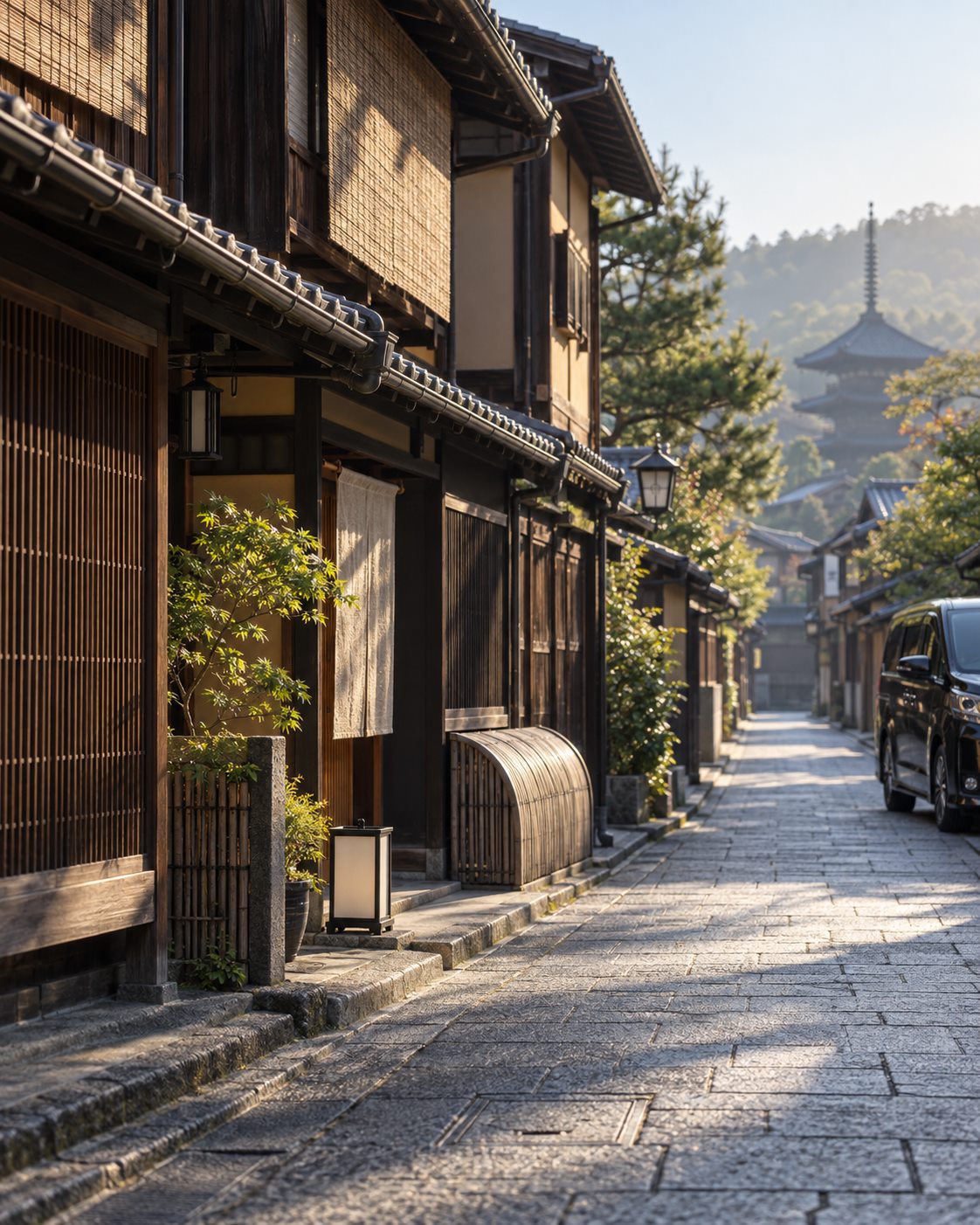
A common first route
Three cities can work well when the order has a reason.
Tokyo, Kyoto and Osaka offer different rhythms. The route works best when it follows your flight options, the number of hotel changes you are comfortable with, the pace of your group and the experiences you value most. There is no single itinerary that fits every first visit.
Choose the route
Start with the constraint you cannot change.
- Tokyo in, Osaka outA one-way Tokyo–Kyoto–Osaka route can fit flights arriving in Tokyo and departing from Kansai, without returning to the first city.
- Kansai in, Tokyo outReverse the route when your flights work better with a Kansai arrival. Kyoto can be a base of its own or a visit from an Osaka base, depending on how often you want to change hotels.
- Return to TokyoKeep Tokyo at both ends when your flights require it. Reserve time for the return move instead of squeezing it into a sightseeing day.
- Fewer bases, slower paceFamilies, first-time visitors with a long wish list and travellers who prefer unhurried days can choose fewer hotel changes and more time in each base.
Moving between cities
Choose transport for the part of the day it needs to solve.
- Rail for station-to-station travelTrain travel can be a practical choice when your accommodation, luggage and group can move comfortably through the stations.
- Private transfer for a door-to-door moveA private car service can make sense when luggage, children, older relatives, several stops or a hotel-to-hotel schedule make the transfer itself part of the day.
- Keep luggage in the decisionBefore choosing an intercity move, consider bags, hotel access and how much energy your group will have after travel. If you plan to send luggage separately, check hotel acceptance and timing directly.
- Use a dedicated day where it helpsKyoto sightseeing and a cross-city move do not always need to happen together. Giving each job its own day can make a route easier to enjoy.
Arrange the parts you need
Start with the part of the route that needs support.
Decisions before booking
Add a Fuji-area stay for a reason, not as a pin between cities.
- Tokyo–Kawaguchiko–Kyoto–OsakaConsider Kawaguchiko when the Fuji Five Lakes area is the priority. Plan the onward move to Kyoto explicitly: the lake area is not a stop on the Tokyo–Kyoto Shinkansen line. Compare a separate Tokyo-based day trip with an overnight stay before booking hotels.
- Tokyo–Hakone–Kyoto–OsakaHakone offers a different hot-spring and local sightseeing focus. It is not interchangeable with Kawaguchiko, and visiting both adds another regional move. Choose the experience that matters most rather than trying to fit both into one short stop.
- Weather and luggage can change the best choiceFuji views cannot be guaranteed. Keep a worthwhile plan for cloudy weather, check luggage handling with your hotels and allow the onward journey its own space. A proposed route does not include accommodation, tickets or a confirmed private vehicle unless specifically agreed.
Planning suggestions, not a fixed product. Destination/access reference checked 15 November 2026: Official travel information.
Build the route before booking every detail
Share the cities you are considering and what has to work well.
We can discuss a practical order, local transport needs and the support that fits your group.
- Useful route details
- Dates, preferred airports, city order, hotel changes, group size and luggage.
- For a transfer quote
- Use a route page when you already know the pickup, destination and service date.
- For the wider journey
- Use Private Journeys when several cities and services need to work together.